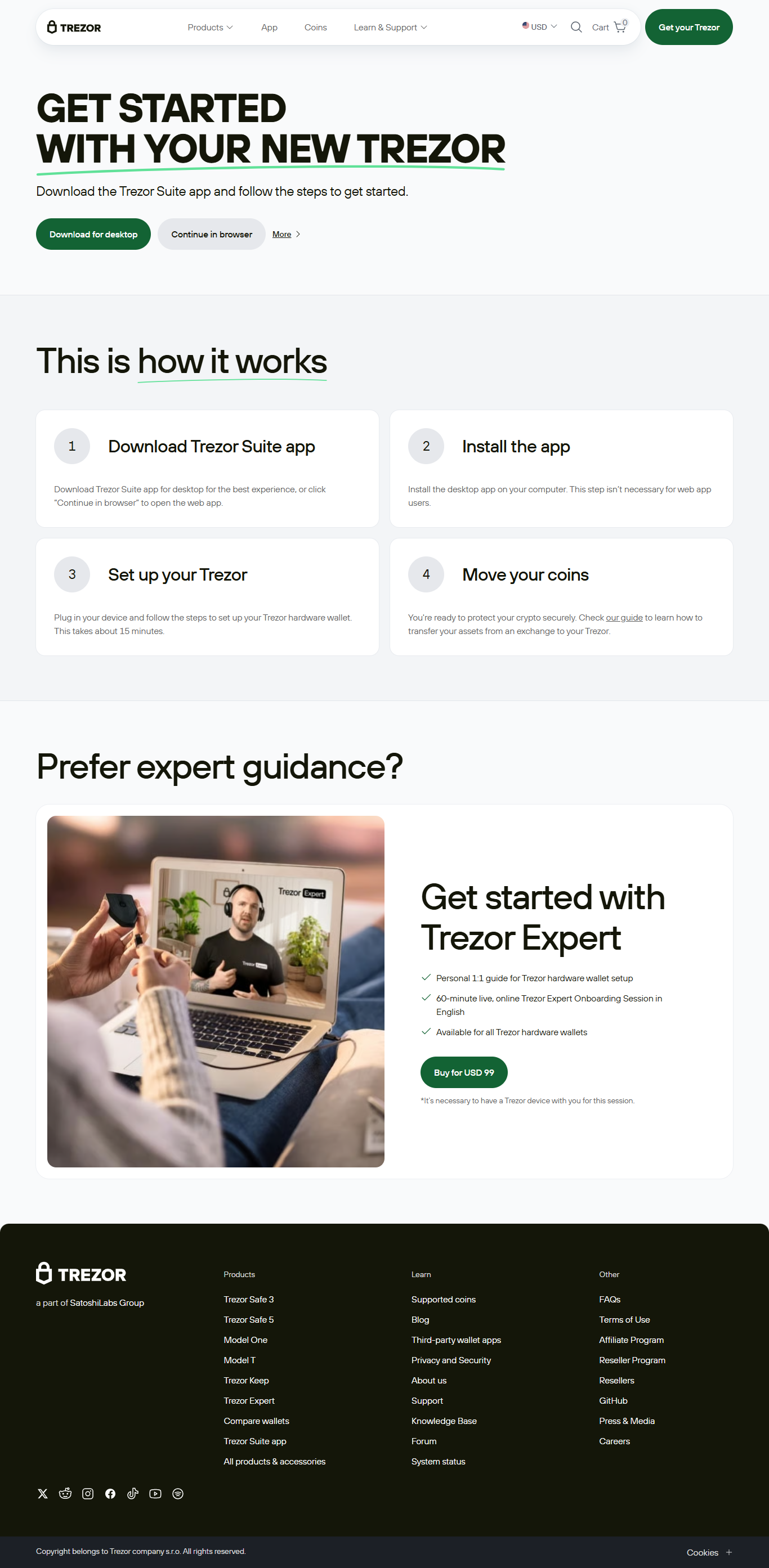
Trezor Bridge is a small, purpose-built application that provides a secure communication channel between your desktop/browser and your Trezor hardware wallet. Instead of allowing applications direct low-level access to the device over USB, Bridge translates and verifies messages so that only well-defined, constrained operations are performed. This extra layer preserves the hardware wallet’s fundamental guarantee: private keys remain inside the device and out of reach from the host computer.

What Bridge does — in plain terms
When you perform an action such as sending crypto or signing a message, your browser or app constructs a request. Bridge receives that request, hands it to the Trezor device, and waits for the device to approve or reject the operation. The device displays transaction details on its secure screen so you can confirm them physically. Because signatures are produced on the device itself, a compromised computer cannot generate valid transactions without your explicit confirmation.
Bridge reduces attack surface by preventing arbitrary host-level commands from reaching the device.
Every signature requires physical confirmation on the device, keeping control with the user.
Supports major desktop OSes and integrates with the official Trezor Suite and many third-party wallets.
Installation and updates
Install Bridge from the official Trezor website or verified distribution channels. It typically runs as a background service and is detected automatically by supported browser wallets. Regularly update both Bridge and your device firmware — updates include security patches and usability improvements that ensure reliable connectivity.
Best practices for safe use
- Download official builds only: Avoid unofficial sources to prevent tampered software.
- Confirm on-device: Always verify transaction amounts and addresses on the device’s screen before approving.
- Use trustworthy hosts: Prefer your personal computer over public or shared machines for managing funds.
- Backup recovery seed: Store your recovery phrase offline in a secure location; Bridge does not manage backups.
Troubleshooting quick guide
If your browser cannot see the device, check that Bridge is installed and the service is running. Try a different USB port or cable, and reload the web page. In some cases, restarting the Bridge service or the computer resolves detection issues. If problems persist, check firmware compatibility and consult official support resources.